This Parent Verbal Affirmations Guide helps create secure attachment between parents and children. How?
Kids feel assured during moments of vulnerability
Kids internalise your affirmations over time, so that your words become a supportive narrative they use to talk to themselves in difficult situations
What to do:
Notice key moments of vulnerability, like when kids face transitions at new schools or classes, learn a new skill, deal with disappointment, or experience conflict with friends. Share 1-2 affirmations a day to help them feel emotionally secure. Then, share an example where you dealt with a similar situation and how you decided to approach it.
What to say, as an example:
‘I know the swimming contest didn’t go as you hoped - but I’m proud of you for trying your very best and not giving up half way. We’ll find a way to improve our practice so you can do better next time. I remember losing the final point in a doubles tennis match in high school, and instead of beating myself up for it, I decided to focus on learn from my mistake during practices after, and we won the next doubles game!’
Notice whether your kids begin to respond to transitions or failures differently, and keep sharing encouraging words to keep seeing improvements.
This Parent Verbal Affirmations Guide helps create secure attachment between parents and children. How?
Kids feel assured during moments of vulnerability
Kids internalise your affirmations over time, so that your words become a supportive narrative they use to talk to themselves in difficult situations
What to do:
Notice key moments of vulnerability, like when kids face transitions at new schools or classes, learn a new skill, deal with disappointment, or experience conflict with friends. Share 1-2 affirmations a day to help them feel emotionally secure. Then, share an example where you dealt with a similar situation and how you decided to approach it.
What to say, as an example:
‘I know the swimming contest didn’t go as you hoped - but I’m proud of you for trying your very best and not giving up half way. We’ll find a way to improve our practice so you can do better next time. I remember losing the final point in a doubles tennis match in high school, and instead of beating myself up for it, I decided to focus on learn from my mistake during practices after, and we won the next doubles game!’
Notice whether your kids begin to respond to transitions or failures differently, and keep sharing encouraging words to keep seeing improvements.

 Image 1 of 2
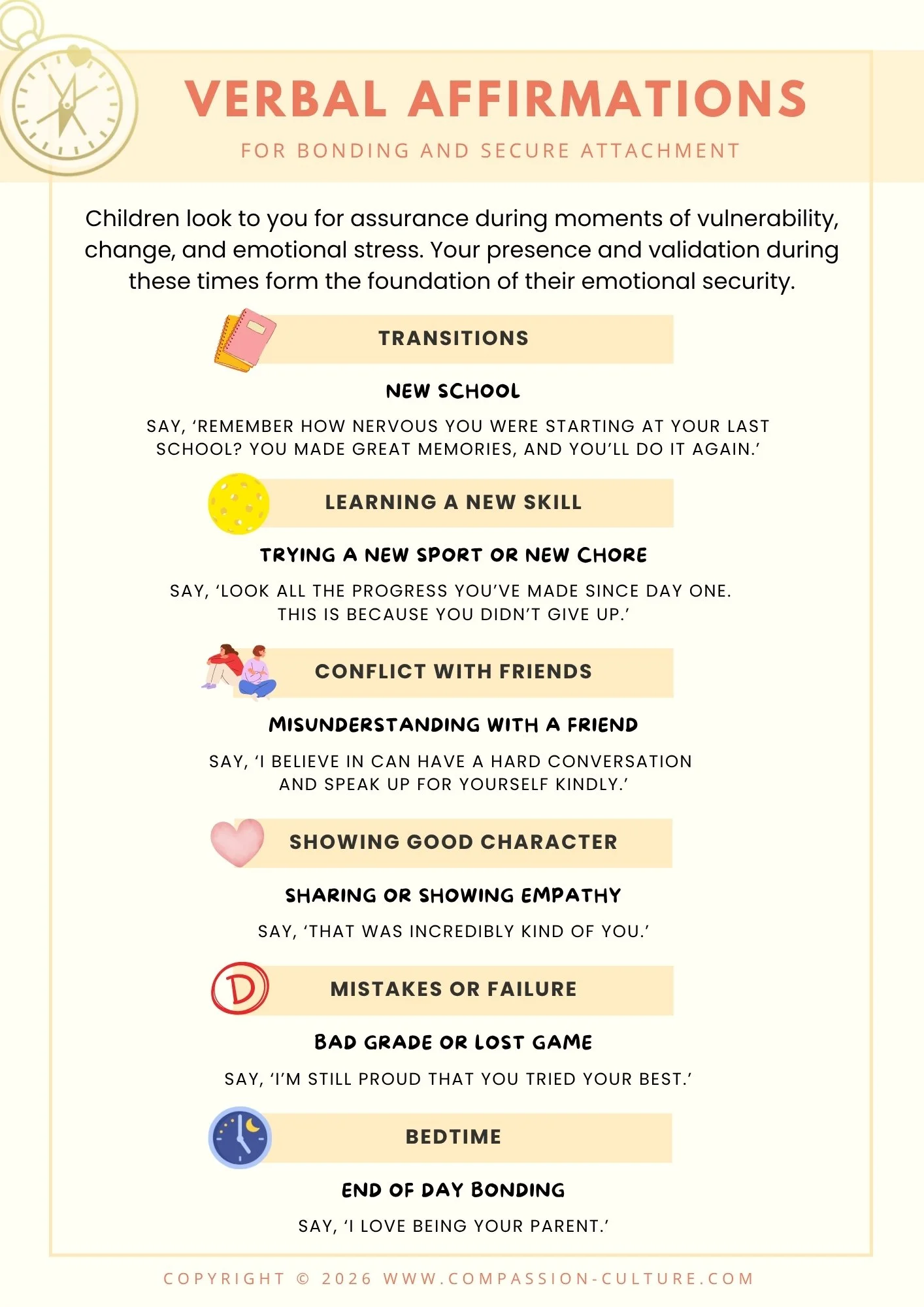 Image 2 of 2