This Rupture and Repair Guide helps parents restore safety and warmth after conflict by turning fights into connection. How?
Kids learn that by taking responsibility to improve, relationships can survive conflict, and mistakes do not define their self-worth
Kids and parents build trust through mutually honest conversations during disagreements
Parents protect their own wellbeing by maintaining firm boundaries with kids
What to do:
Each time you feel frustrated with your child’s behaviour, follow these four steps consistently to create firm boundaries while ensuring safety and warmth after to protect your relationship.
What to say after a conflict, as an example:
‘I noticed we had a really tough moment earlier. I raised my voice and that wasn’t okay. I’m sorry if that felt scary or unfair. I still love you, even when we disagree. What’s one thing that would help you feel safer when we argue? Let’s try that together.’
Notice whether your child seems more willing to make improvements after disagreements, uses words or signals to say they’re upset, and whether conflicts feel shorter and less intense.
This Rupture and Repair Guide helps parents restore safety and warmth after conflict by turning fights into connection. How?
Kids learn that by taking responsibility to improve, relationships can survive conflict, and mistakes do not define their self-worth
Kids and parents build trust through mutually honest conversations during disagreements
Parents protect their own wellbeing by maintaining firm boundaries with kids
What to do:
Each time you feel frustrated with your child’s behaviour, follow these four steps consistently to create firm boundaries while ensuring safety and warmth after to protect your relationship.
What to say after a conflict, as an example:
‘I noticed we had a really tough moment earlier. I raised my voice and that wasn’t okay. I’m sorry if that felt scary or unfair. I still love you, even when we disagree. What’s one thing that would help you feel safer when we argue? Let’s try that together.’
Notice whether your child seems more willing to make improvements after disagreements, uses words or signals to say they’re upset, and whether conflicts feel shorter and less intense.

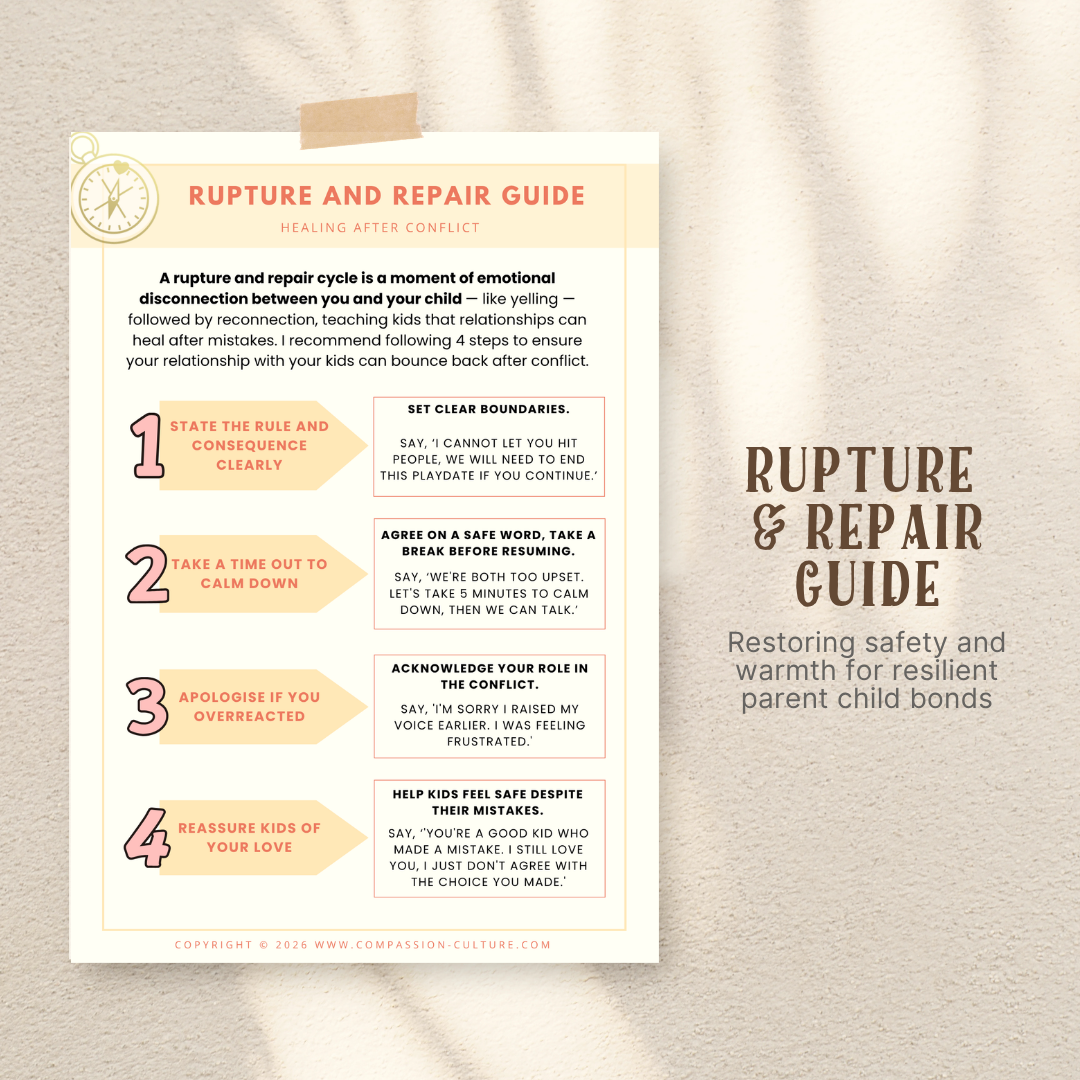 Image 1 of 2
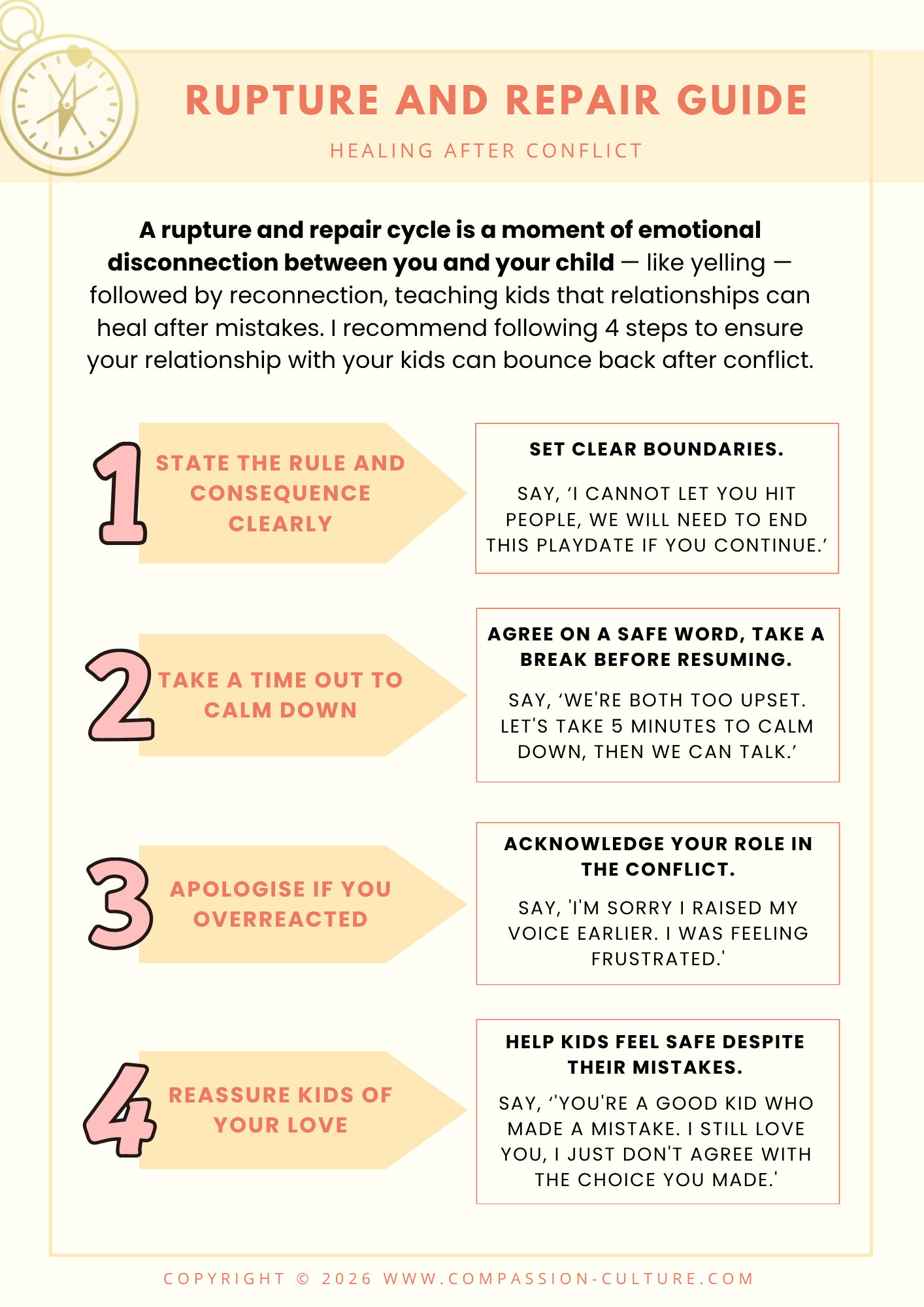 Image 2 of 2