Family Empathy Charts help build empathy and deepen understanding between parents and children. How?
Kids feel heard and understood
Kids enjoy getting to know you are as person, not just a parent
Kids see you role model ways to deal with difficult emotions
What to do:
At the end of each day, spend 10 mins to check in on each other. Take turns sharing how you are feeling, and anything that happened in the day. Alternatively, you can guess how the other person is feeling.
What to say:
‘This Empathy Chart helps us listen to and check in with each other, by getting us to practice putting ourselves in each other’s shoes to imagine how the other person is feeling - because even adults get sad or upset sometimes. Each day, we’ll take turns drawing a face or writing one word that represents how we feel. Then, we can show each other kindness by giving a hug or offering comforting words.’
You’ll discuss…
Notice whether your kids begin to deal with their emotions differently, or become more attuned to your feelings, and repeat as a ritual each week to continue seeing improvements.
Family Empathy Charts help build empathy and deepen understanding between parents and children. How?
Kids feel heard and understood
Kids enjoy getting to know you are as person, not just a parent
Kids see you role model ways to deal with difficult emotions
What to do:
At the end of each day, spend 10 mins to check in on each other. Take turns sharing how you are feeling, and anything that happened in the day. Alternatively, you can guess how the other person is feeling.
What to say:
‘This Empathy Chart helps us listen to and check in with each other, by getting us to practice putting ourselves in each other’s shoes to imagine how the other person is feeling - because even adults get sad or upset sometimes. Each day, we’ll take turns drawing a face or writing one word that represents how we feel. Then, we can show each other kindness by giving a hug or offering comforting words.’
You’ll discuss…
Notice whether your kids begin to deal with their emotions differently, or become more attuned to your feelings, and repeat as a ritual each week to continue seeing improvements.

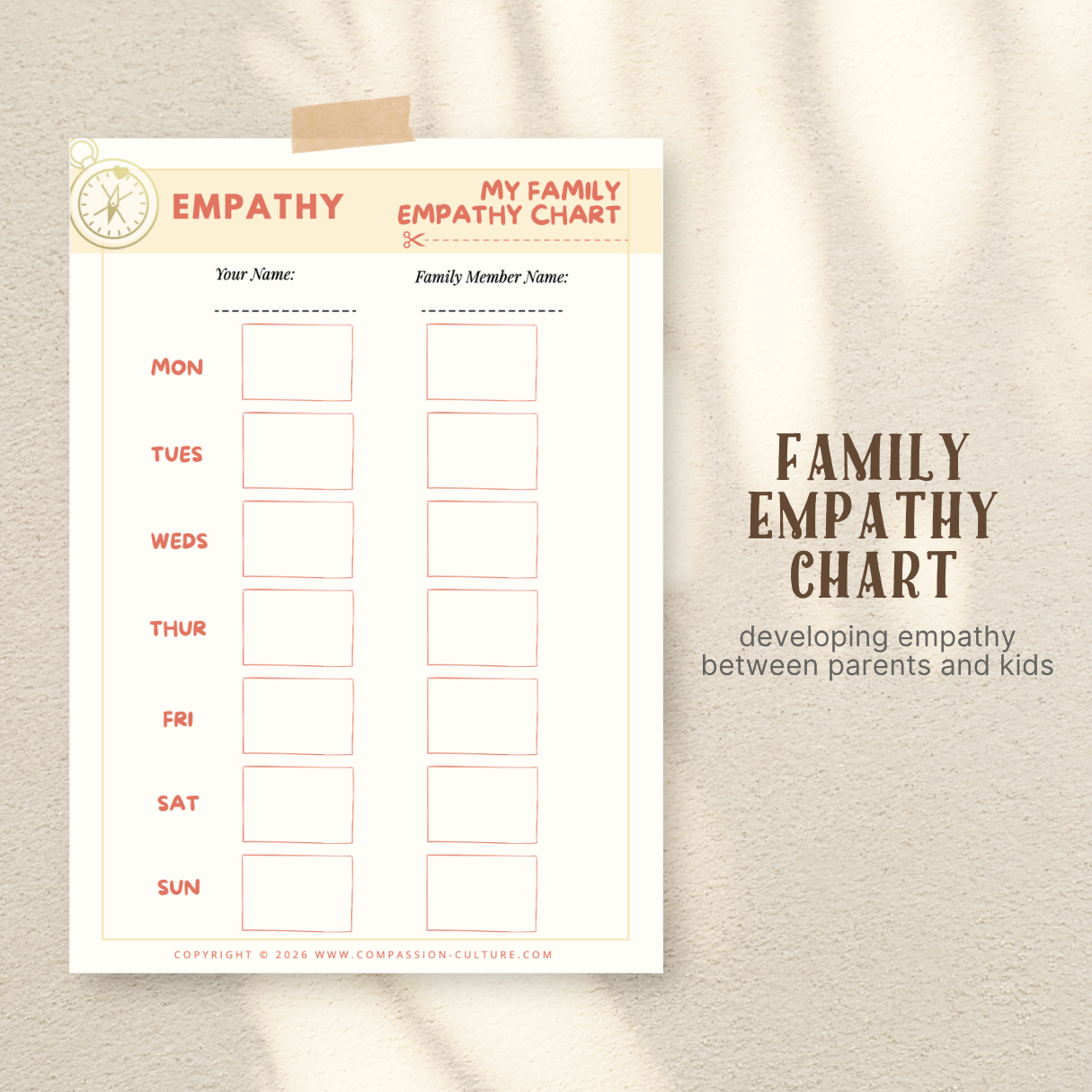 Image 1 of 2
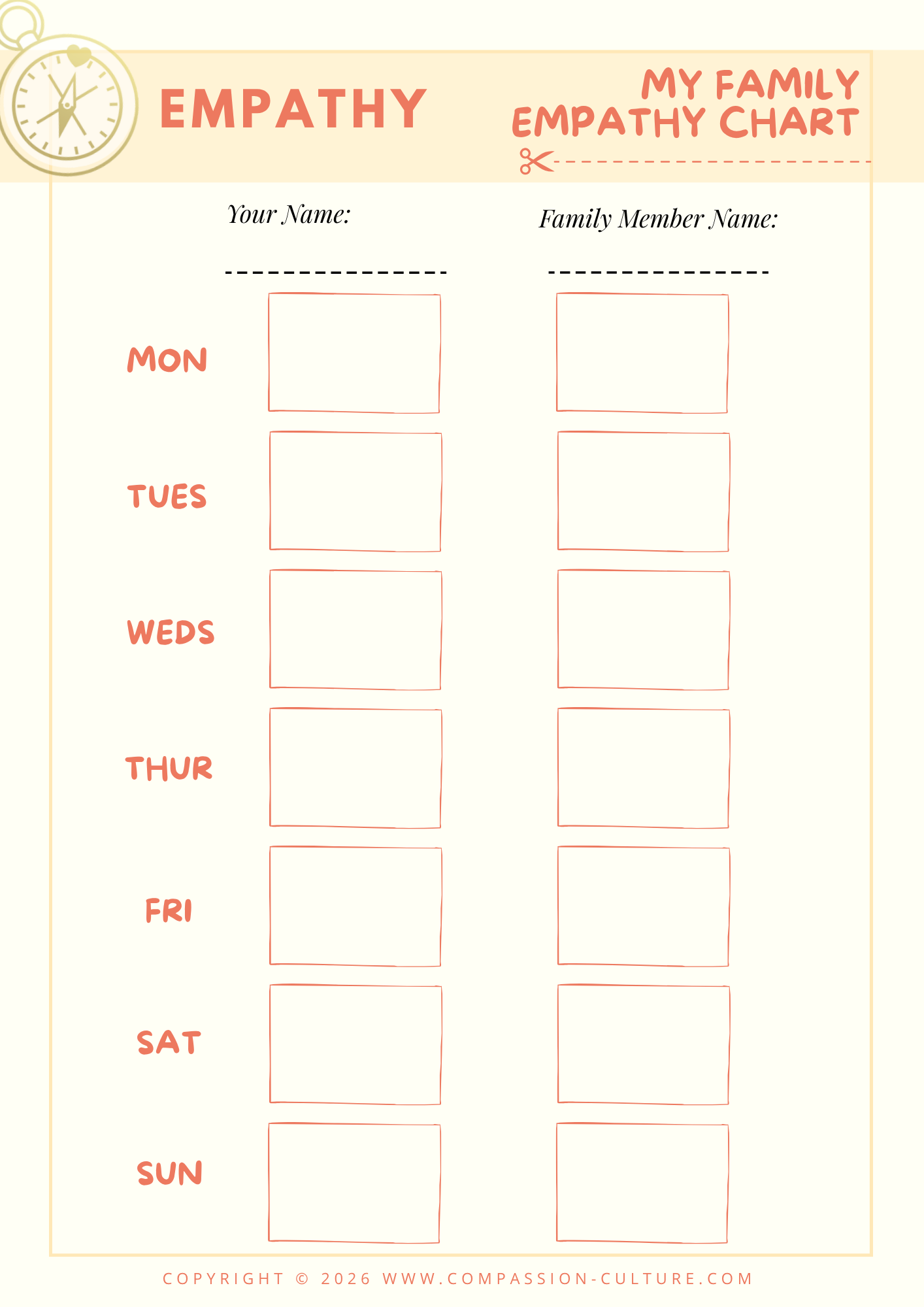 Image 2 of 2